After a storm
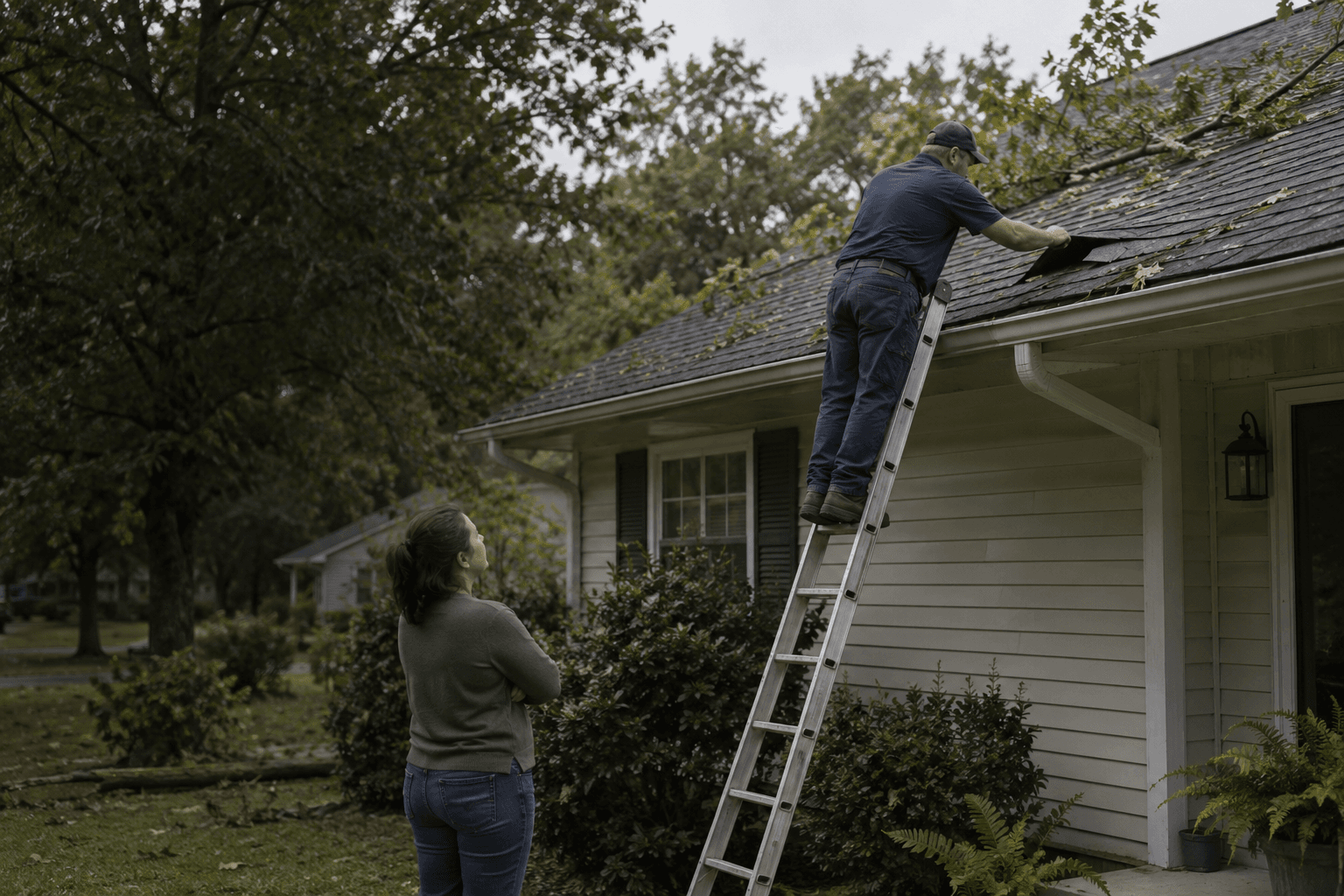
Hail and wind damage isn't always visible from the ground. A roofing professional can inspect and document it. Be cautious of anyone who pressures you to sign on the spot — take the time to compare written estimates.
A stain spreading across the ceiling or shingles in the yard after a storm. Tell us what you're seeing and we'll help you reach independent roofing professionals who serve your area.
Once water gets past the shingles it can reach insulation, ceilings and framing. A timely repair or temporary cover limits what's affected.
Wet, damaged roofs are slippery and may not hold weight. Look from the ground.
Catch drips, move valuables and keep clear of any ceiling that's bulging with water.
Photograph damage inside and out, with dates. Your insurer may ask.
Be cautious of anyone pressuring you to sign on the spot after a storm.
Don't go on the roof, especially when it's wet or windy. Focus on limiting damage indoors.
If there's fire, a gas smell or any risk to someone's safety, leave and call 911.
Every provider is an independent business. A little context helps you compare estimates and choose with confidence.
Hail and wind damage isn't always visible from the ground. A roofing professional can inspect and document it. Be cautious of anyone who pressures you to sign on the spot — take the time to compare written estimates.
Water can run along rafters before it drips, so the stain on your ceiling may not be directly below the problem. That's one reason a proper inspection matters.
A few quick answers and you're done. You decide who to talk to.
Get Roofing HelpMany residential replacements take one to a few days, depending on size, weather and what's found underneath. Your roofer can give you a realistic timeline.
That's your decision. Many homeowners get an inspection and documentation first, then review their policy and deductible with their insurer.
It depends on what's wrong, how big the job is, access, materials and local rates. Independent pros set their own prices, so ask for a written estimate — and what could change it — before work starts.
It depends on your area, the time of day and how busy local pros are. Say that it's urgent when a pro contacts you, and follow the safety steps on this page in the meantime.